SU Ag Center Selected for FAA UAS-Collegiate Training Initiative




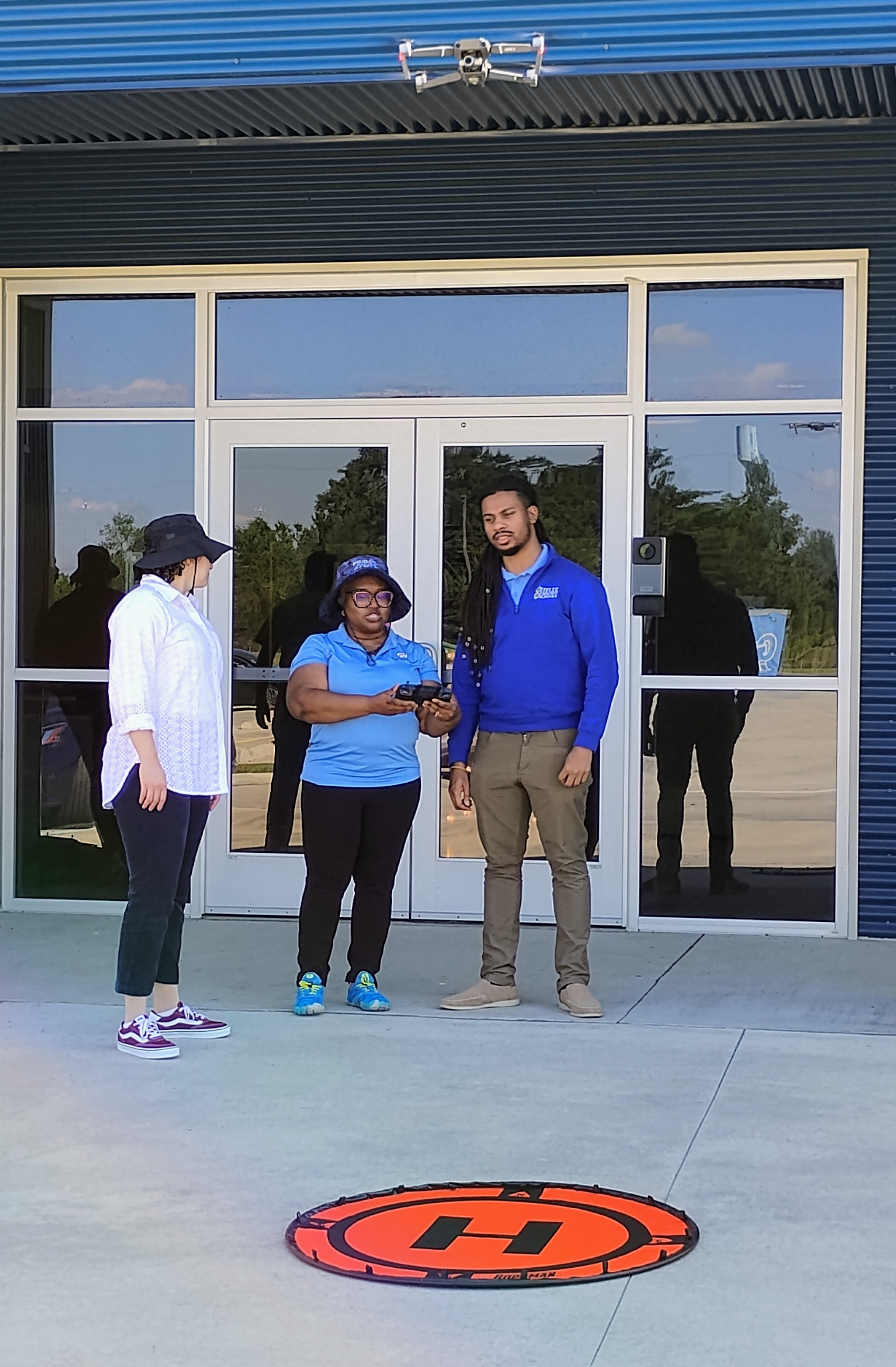
Baton Rouge, La. - The SU Ag Center’s drone education and training program has been selected to participate in the Federal Aviation Administration’s (FAA) Unmanned Aircraft Systems-Collegiate Training Initiative (UAS-CTI).
The FAA UAS-CTI designation recognizes collegiate institutions that provide students with education and training designed to prepare them for careers involving unmanned aircraft systems (UAS), commonly known as drones. The designation represents an important milestone in the SU Ag Center’s continued efforts to expand drone technology, aviation education, workforce development, and applied research opportunities for students and communities. This designation was achieved in partnership with Alcorn State University.
“Being selected for the FAA UAS-Collegiate Training Initiative is an important recognition of our commitment to preparing students for the rapidly evolving opportunities associated with unmanned aircraft systems,” said Dr. LaShunda Anderson Hodges, Full Research Professor of Soil & Plant Sciences at the Southern University Ag Center. “This designation strengthens our ability to connect agricultural research, drone technology, workforce development, and hands-on education while preparing the next generation of professionals to safely and effectively use UAS technology.”
The FAA’s UAS-CTI program recognizes institutions that prepare students for careers in unmanned aircraft systems. Participating institutions provide academic instruction and training addressing key areas of UAS operations, including flight practices, applications, safety, maintenance, privacy considerations, and federal policies and regulations governing unmanned aircraft.
The Southern University Ag Center’s drone program integrates UAS technology with agricultural research, precision agriculture, soil and plant sciences, environmental monitoring, remote sensing, and workforce development. Students gain exposure to the practical and scientific applications of drone technology while developing skills relevant to emerging careers in agriculture, aviation, environmental sciences, geospatial technology, and related STEM fields.
“Our goal is to move beyond simply teaching students how to fly drones,” Dr. Hodges said. “We are preparing students to understand how UAS technology can be used as a scientific and decision-making tool. From assessing soil health and crop conditions to collecting aerial imagery and supporting environmental research, our students are learning how drone technology can address real-world agricultural and environmental challenges.”
The SU Ag Center has continued to expand its drone research, education, and outreach activities through collaborations with federal agencies, industry partners, drone professionals, researchers, students, and community stakeholders. Programming includes FAA Part 107 preparation, hands-on flight experiences, drone-based research, aerial data collection, photogrammetry, multispectral and thermal imaging, precision agriculture applications, and the integration of UAS technology into soil health and environmental research.
The program also supports the Southern University Ag Center’s broader mission of advancing innovative agricultural research, providing experiential learning opportunities, developing a highly skilled STEM workforce, and ensuring that students and communities have opportunities to participate in emerging technologies transforming agriculture and related industries.
Selection for the FAA UAS-CTI program will further strengthen opportunities for Southern University students to develop technical knowledge, professional competencies, and practical experience that can position them for careers within the growing unmanned aircraft systems industry.
About the FAA UAS-Collegiate Training Initiative
The Federal Aviation Administration’s UAS-Collegiate Training Initiative works with colleges and universities to prepare students for careers in unmanned aircraft systems and to strengthen the pipeline of qualified professionals entering the rapidly developing UAS workforce.

